
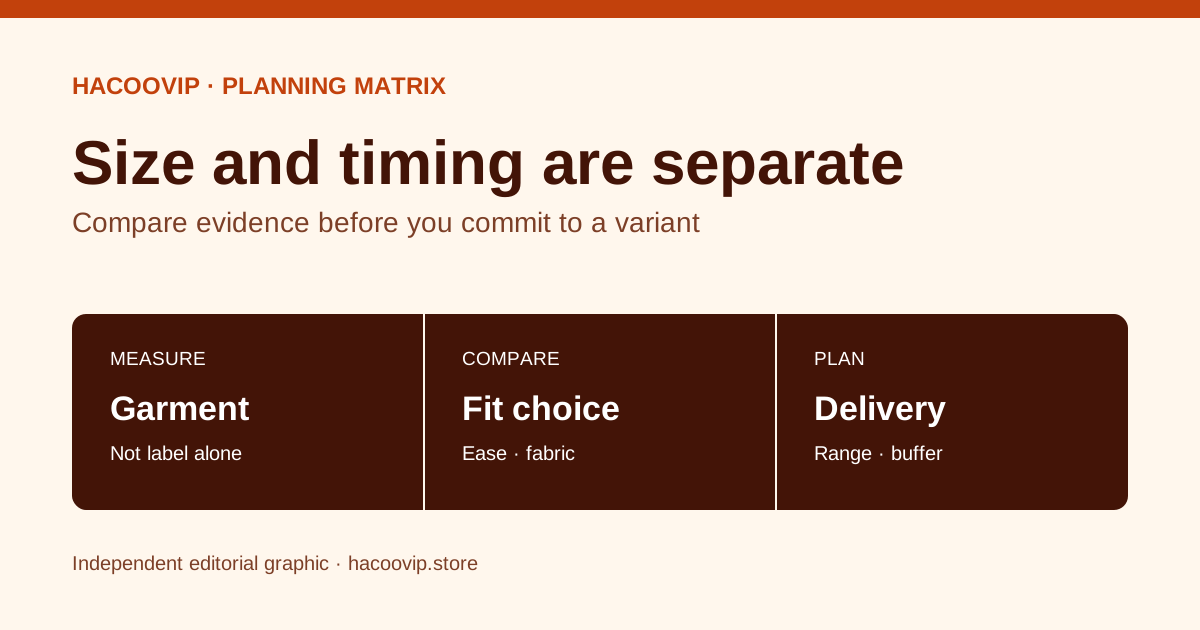
Plan fit and delivery as one decision
Sizing and shipping are often treated as separate topics, but they meet in the final purchase decision. A second size added ‘just in case’ changes the basket. A bulky jacket can affect packaging more than a lightweight shirt. A product that does not fit can create a return problem that is more expensive and time-consuming than the original delivery. Planning both topics before checkout gives you a more realistic view of the total commitment.
Begin with two lists. The fit list contains body or reference-garment measurements, desired ease and acceptable variation. The delivery list contains destination, required arrival window, item price ceiling and the total amount you are prepared to pay. Keep both visible while browsing. A product only remains a candidate if the available information supports both lists. This prevents an attractive item from reaching checkout before you notice that its dimensions or delivery conditions do not work.
Build a reliable measurement reference
Use an item you already own and like. Lay it flat without stretching the fabric. For tops, record chest width, shoulder width, body length and sleeve length. For pants, record waist laid flat, rise, inseam, thigh and hem opening. For footwear, measure both feet from heel to longest toe in centimetres and use the larger result. Note the thickness of socks you expect to wear and whether your reference shoe has a narrow or wide shape.
Measurements are most useful when you preserve the method. Chest width measured flat is not the same as body circumference. A sleeve measured from the shoulder seam is not the same as one measured from the centre back. Write a short label next to each number so you can compare like with like. If the destination chart does not explain its method, use product diagrams, reviews and visible proportions to determine whether the numbers are comparable.
Translate preference into ease
The same body measurement can support several garment sizes depending on the intended fit. Ease is the difference between your measurement and the garment measurement. A fitted T-shirt, regular hoodie and oversized jacket should not all match your reference width. Compare each candidate with a similar garment that already creates the fit you want. This approach is more reliable than adding a fixed number of centimetres across every product type.
Fabric behaviour matters too. Stretch can tolerate a closer measurement, while a rigid woven fabric needs room for movement. Thick lining reduces internal space even when the external dimensions look generous. Product photos can show intended drape, but use the chart for the decision. If the chart lists body recommendations instead of garment dimensions, allow for the seller’s intended ease but look for reviews that confirm how the recommendation performs.
Handle charts with missing or inconsistent data
A complete chart is ideal, but many listings provide only part of the information. Identify the dimension most likely to determine fit. For a jacket that must close comfortably, chest width may be decisive. For pants, waist and rise can matter more than total length if hemming is possible. For shoes, internal length and width evidence are more useful than a familiar regional label. Do not pretend a missing decisive measurement is unimportant.
When text and image charts conflict, record both and look for a platform support route or another listing. Reviews can help identify which chart was used by recent buyers, but make sure the review refers to the same variant and time period. Product pages change. If uncertainty remains, compare the cost of choosing another product with the potential cost and effort of a poor fit. Often the better-documented option is the better value.
Understand what creates the delivery total
The item price is only one part of the final amount. Destination, basket contents, packaging, shipping service, tax treatment, currency conversion and active promotions can all affect checkout. Independent guides cannot calculate that total reliably without the current account, address and live order. Use guide prices to compare products, then use the checkout itself to confirm the amount you will actually pay.
Avoid copying a shipping example from another customer and treating it as a quote. Their destination, date, basket, packaging and available service may differ. A useful example explains variables; it does not promise a rate. When timing matters, read the current estimated window and remember that it is an estimate, not a guaranteed arrival date unless the platform explicitly states otherwise. Build buffer into gift, event and travel deadlines.
Actual weight and volumetric weight
Carriers may consider both scale weight and the space a parcel occupies. A lightweight but bulky item can have a volumetric weight higher than its actual weight. A common educational formula multiplies length, width and height in centimetres and divides by a carrier-specific divisor. The result is useful for understanding why a large parcel may cost more than expected, but it is not an official quote and different routes can use different rules.
Use a planning calculator only to compare scenarios. Folding a bulky jacket more efficiently or removing unnecessary retail packaging can change dimensions, but packaging choices also protect the product. Never assume that the smallest possible parcel is automatically best. The live checkout or fulfilment process determines the available options. Your job before ordering is to recognise which products are likely to create more volume and leave enough budget for the final confirmed amount.
Plan a mixed basket deliberately
A mixed basket can make delivery more efficient, but it also increases the number of variables. Check each item’s size and variant before adding another product. Keep a simple table with item, quantity, selected size, current price and any important packaging note. This reduces the chance of correcting one item while accidentally changing another. Review the basket from the beginning after every major change.
Do not add a weak product solely to ‘make shipping worthwhile.’ Delivery cost is sunk only after purchase; before payment, every item should justify its own place. Compare the total against your original budget, not just the average cost per item. A larger basket can also make returns or customer-service conversations more complex. Clarity is more valuable than maximising quantity.
Check destination and timing at the right moment
Destination eligibility can change by product, region and account context. Confirm that the item can be delivered to your address before spending too much time on secondary details. Then check again at checkout, where the selected address and full basket are present. If a product is restricted, do not assume another link or wording will create a valid route. Choose an eligible alternative.
For timing, separate processing from transit. A shipping service estimate may begin after an order is prepared, so the total wait can be longer than the headline number. Weekends, holidays, customs activity and local delivery conditions can add variation. If arrival before a specific date is essential, order with a meaningful buffer or choose a local option with a clearer commitment. An inexpensive international listing is not a good event purchase when the timing risk is unacceptable.
Prepare for post-purchase tracking
Save the order confirmation, selected product details and the support route connected to the transaction. Tracking updates can pause between network scans, especially during handover between carriers. A pause does not automatically prove a parcel is lost, but an unusually long delay should be handled through the platform’s current help process. Independent spreadsheet sites cannot access order status or alter delivery.
When a package arrives, compare the received item with the selected variant and document any material problem promptly. Keep packaging until you are satisfied with the item and understand any applicable return process. Follow the evidence requirements and timing shown in the live policy. A clear record—order details, photos and a concise description—is more useful than a long emotional message when support needs to evaluate a problem.
Use a final fit-and-delivery gate
Before payment, answer five questions. Does the selected variant match the product you reviewed? Do the available measurements support your intended fit? Is the item still within budget after current shipping and tax? Is the estimated timing acceptable with buffer? Do you understand where support and tracking will appear after purchase? If any answer is unknown and important, pause rather than relying on momentum.
This final gate turns sizing and shipping from background worries into checkable decisions. It does not guarantee a perfect outcome, but it removes many avoidable errors: choosing by letter size alone, using an old price, assuming another buyer’s shipping rate or missing a changed variant. HacooVIP keeps discovery fast; the live listing and checkout provide the current transaction details. Use both surfaces for the job each can actually do.
Keep measurement types separate
Use millimetres for foot measurements and clearly labelled centimetres for flat garment measurements. Foot length, insole length and outsole length are different inputs. Likewise, a garment’s flat chest width is not the same field as a body chest circumference. In an illustrative comparison, a top measuring 58 cm across the chest and a chart labelled “chest 116” cannot be treated as equivalent until the seller confirms the second chart’s unit and method. Record the shoulder construction and sleeve starting point too: a dropped shoulder changes the meaning of sleeve length. If the chart lacks a definition, request clarification before choosing. Use a well-fitting item as your reference, repeat the measurements and keep uncertain fields visible. Do not solve uncertainty by applying a universal size-up rule across shoes, hoodies and jackets.